
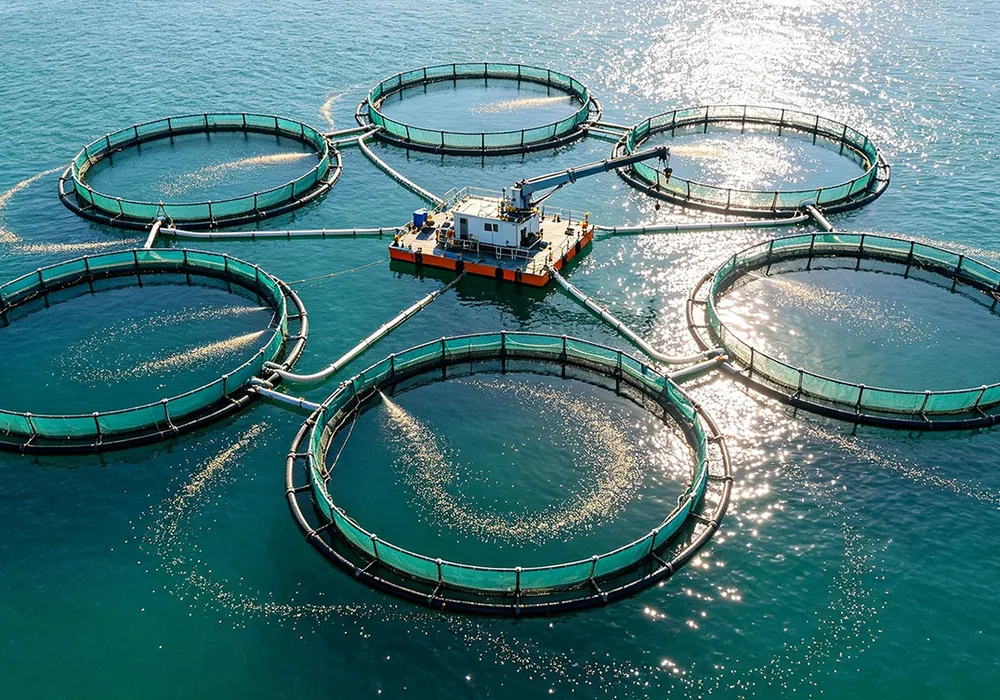
Feeding is the fixed point of every pond day. It has to happen on time whatever the weather is doing, and it usually means several trips to the water's edge before the day is over. When one person looks after several ponds, or when something else needs attention, the schedule slips. Feeding late affects how much the stock takes in; feeding in a hurry spreads pellets unevenly and leaves residue that works against water quality.
What it costs to stand at the pond
On a traditional pond, the operator is tied to the bank. Several ponds mean time spent moving between them, labor is a cost that keeps rising, and a change in the weather rarely waits for someone to arrive. Owners who need to be away must find a stand-in, explain the routine and then trust a third party with the feeding rhythm. The repetitive work also takes time away from water-quality monitoring, disease prevention and market contact — the parts of the job that decide the season.
Running the feed from a phone
Remote feeding moves the controls into a mini-program on the phone. From the pond-side room, from home or from the road, the operator can start a feeding cycle, pause it, change the duration and set the feed rate. Nobody has to be at the bank at a fixed hour to keep the schedule.
The more important gain is being able to respond on the day itself. On a cloudy day dissolved oxygen drops; muggy weather or a swing in water quality can reduce appetite. The right answer is a smaller ration, or no feeding until conditions improve. With remote control that decision is made when it is needed, not after a drive back to the pond. Fewer blind feedings mean less residual feed on the bottom, less material loading the water and fewer conditions that favor disease.
Schedules, records and several ponds at once
A timed plan covers the normal days: feed at set times without anyone touching a button, with remote manual control available whenever a decision is needed. The two modes can be switched as conditions change. Each feeding is recorded with its time and quantity, so the operator can look back over a stage of the cycle and refine the rhythm for that pond. On a farm with several ponds, one person can manage them from one screen — which is where the labor saving shows up most clearly.
What to set up before relying on it
- List every pond and feeding point with the person responsible for it.
- Write a default feeding plan per pond, then a separate rule for poor-weather days: when to reduce the ration and when to stop.
- Review the feeding records weekly and adjust the plan gradually rather than changing it by feel.
- Keep a manual fallback and a clear instruction for it, so remote operation never becomes a single point of failure.
- Use the time saved for water testing and stock checks; the purpose of remote feeding is to spend more time on the pond, not less.
Remote feeding is not a hands-off model. It is a way of making feeding controllable, traceable and adjustable, so that labor is spent where judgment matters and the routine part of the day runs on a plan.